

Guide
Why You Need Professional Drug or Alcohol Detoxification
Entering drug or alcohol detoxification is a brave and essential step toward recovery. For many, the idea of withdrawing from substances can be daunting, raising concerns about safety and discomfort. This page will help explain why professional medical detox is not only necessary but also the safest and most effective way to begin your journey to sobriety.
Medically Reviewed By: Dr. An Nguyen
Sections
Jump To:
How to Taper Off Drugs or Alcohol
Tapering off drugs or alcohol independently is a risky endeavor due to severe and potentially life-threatening withdrawal symptoms. While the idea of gradually reducing substance intake at home may seem appealing, it lacks the essential medical supervision and controlled environment necessary for safety.
Healthcare professionals at a rehab facility can assess your health condition, create a personalized tapering schedule, and provide adjunctive medications to manage withdrawal symptoms. This supervised approach minimizes complications and significantly reduces the risk of relapse, offering a safer and more effective path to sobriety compared to attempting to taper alone.

Professional Medically-Supervised Detox
Why is professional detox necessary for drugs or alcohol?
Professional detox is essential for safely managing withdrawal symptoms from drugs or alcohol, as attempting to detox alone can be dangerous. Healthcare professionals at a rehab facility like ours provide medical care to address health conditions and prevent complications like seizures or delirium tremens. Supervised withdrawal in a controlled environment reduces the risk of relapse, with studies showing 65–80% of unsupervised detox attempts fail, per the National Institute on Drug Abuse. This evidence-based approach ensures a safe and effective start to recovery journeys.
What are the risks of detoxing from drugs or alcohol at home?
Detoxing from alcohol or drugs at home carries significant risks due to unpredictable withdrawal symptoms. Health conditions like dehydration, heart issues, or severe psychological distress can become life-threatening, especially for those who have stopped drinking heavily or using drugs long-term. The CDC notes a 5–10% mortality risk for severe alcohol withdrawal without medical intervention. Home detox also increases the risk of relapse, as cravings and lack of a support system make it hard to stay sober. Medical supervision is critical to ensure safety.
How does medical detox work for substance use?
Medical detox involves a structured withdrawal process under the supervision of a healthcare professional at a rehab facility. Patients receive 24/7 medical care to manage withdrawal symptoms, which range from mild (e.g., nausea) to severe (e.g., seizures). Medical professionals assess the patient’s health condition, create a treatment plan, and use adjunctive medications like benzodiazepines for alcohol or methadone for opioids to ease symptoms. Therapy and support systems begin during detox, setting the stage for long-term substance abuse treatment and recovery journeys.
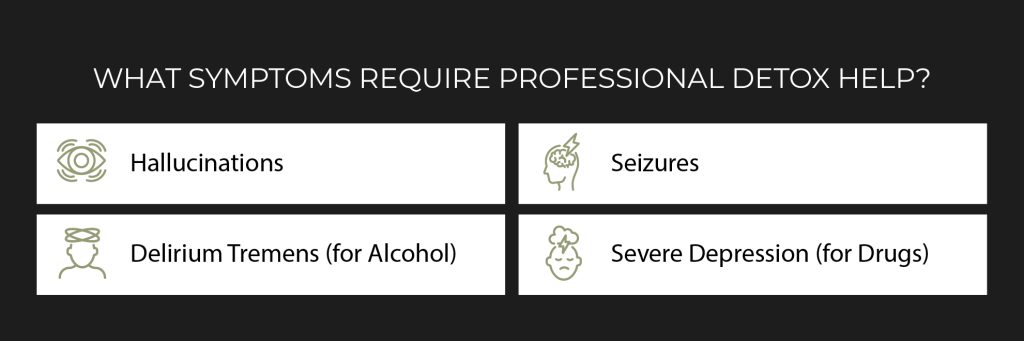
What symptoms require professional detox help?
Severe withdrawal symptoms requiring professional help include hallucinations, seizures, delirium tremens for alcohol, or severe depression for drugs like opioids. Even mild symptoms like nausea, tremors, or cravings can escalate without medical care, per SAMHSA guidelines. Healthcare professionals at a treatment center monitor symptoms, adjusting the treatment plan to prevent complications. Those with health conditions like heart disease or mental health issues need supervised withdrawal to avoid life-threatening risks, ensuring a safe and effective process.

How long is a professional drug or alcohol detox?
The duration of medical detox varies from person to person, typically lasting 5–10 days for acute withdrawal symptoms, per American Addiction Centers. Detox from alcohol often takes 7–10 days, while opioid detox may last 5–14 days, depending on the substance and dose. Post-acute withdrawal syndrome (PAWS), like mood swings or cravings, can persist for weeks. Rehab facilities provide short-term detox with ongoing monitoring, ensuring recovery journeys start with a stable foundation for substance abuse treatment.
What medications are used in drug or alcohol detox?
Medical detox uses adjunctive medications to ease withdrawal symptoms. For detox from alcohol, benzodiazepines like lorazepam prevent seizures, while naltrexone reduces cravings, per the FDA. For opioids, methadone or buprenorphine stabilizes withdrawal. Non-opioid drugs like clonidine manage symptoms like sweating or tremors. Healthcare professionals at a treatment center tailor these medications to the patient’s health condition, ensuring a safe and effective withdrawal process as part of the treatment plan.

Drug and Alcohol Detox vs. Rehabilitation
Is detox the same as rehab for addiction?
Medical detox is not the same as rehab. Detox focuses on managing withdrawal symptoms in a controlled environment, typically lasting 5–10 days, while rehab involves long-term substance abuse treatment through behavioral therapies, counseling, and skill-building. Detox clears the body of substances, but rehab addresses the root causes of alcohol use disorder or drug addiction.
How much does professional detox cost?
The cost of medical detox varies based on the rehab facility, levels of care, and location. In the United States, detox costs range from $1,000 to $10,000 for a 5–10-day program, per the American Addiction Centers. Insurance often covers part or all of the cost, depending on the provider.
What happens during the drug detox process?
The drug detox process begins with an assessment by healthcare professionals to evaluate the patient’s health condition and substance use history. In a controlled environment, medical care addresses withdrawal symptoms like nausea, tremors, or cravings through adjunctive medications and monitoring. Therapy introduces coping skills and support systems like counseling, beginning. The process, lasting 5–14 days, stabilizes the body, preparing patients for further substance abuse treatment and long-term recovery journeys.
Why can’t I detox from alcohol or drugs alone?
Attempting to detox alone is dangerous due to life-threatening withdrawal symptoms. Detox from alcohol can cause seizures or delirium tremens, while drug withdrawal may lead to severe depression or suicidal thoughts. Without medical supervision, the risk of relapse is high, with 65–80% of home detox attempts failing, per SAMHSA. Healthcare professionals provide medical intervention, ensuring a safe and effective withdrawal process in a rehab facility with a strong support system.
What are the benefits of inpatient detox?
Inpatient detox at a rehab facility offers 24/7 medical care, reducing the risk of complications like seizures or suicidal thoughts. Patients benefit from a controlled environment, minimizing access to substances and lowering the risk of relapse. Behavioral therapies and support systems like support groups begin during detox, building skills for sobriety. Inpatient detox ensures peace of mind, providing a structured start to recovery journeys with evidence-based care.
How to choose a detox center for drugs or alcohol?
Choosing a treatment center involves researching levels of care, staff credentials, and evidence-based practices. Look for rehab facilities with healthcare professionals trained in substance abuse treatment. Check if the center offers adjunctive medications, behavioral therapies, and support systems. Accreditation by bodies like The Joint Commission ensures quality. Visiting or calling the phone number helps confirm that the center aligns with the patient’s health condition and needs.
What is supervised withdrawal in detox?
Supervised withdrawal involves healthcare professionals overseeing the withdrawal process in a controlled environment. They monitor withdrawal symptoms, administer adjunctive medications, and adjust the treatment plan to address health conditions. This approach, used at rehab facilities, reduces the risk of severe symptoms like tremors or suicidal thoughts, ensuring a safe and effective detox. Support groups and counseling provide emotional support, enhancing the recovery process.
Can family visit during professional detox?
Family members can often visit during medical detox, depending on the rehab facility’s policies. Limited visitation ensures a controlled environment while allowing emotional support from family members, per SAMHSA guidelines.

What comes after detox for drug or alcohol recovery?
After medical detox, the recovery process continues with substance abuse treatment through behavioral therapies like CBT, counseling, and support groups. Rehab facilities offer levels of care, including inpatient or outpatient programs, to address the root causes of addiction. Patients learn coping skills, rebuild brain functions, and develop relapse prevention strategies, ensuring long-term sobriety and independent lives with peace of mind.

Professional Drug and Alcohol Detox at Desert Recovery Centers
At Desert Recovery Centers, we understand the courage it takes to seek help. Our professional addiction recovery programs provide a safe and supervised environment to begin your healing journey.
With compassionate healthcare professionals, evidence-based practices, and comprehensive support systems, we are dedicated to helping you achieve lasting sobriety.
Contact us today to learn more about our levels of care and take the first step towards a healthier, substance-free life. Your recovery journey starts here.
Next Chapter
How to Taper Off Benzodiazepines

Additional Chapters on Drug or Alcohol Detoxification


Don’t Wait Another Day to Help Yourself or A Loved One
We Are Here to Guide You On This Healing Journey
"*" indicates required fields