Beyond the Amenities: What Actually Matters
When most people hear the term "luxury rehab," they picture resort style facilities with swimming pools, gourmet meals, and private rooms. These amenities exist, and they contribute to the treatment experience. But they are not what makes luxury rehab clinically superior. The real differences between luxury and standard rehab are found in the clinical elements that directly impact treatment outcomes: staff credentials, client to therapist ratios, frequency of individual therapy, quality of psychiatric care, level of treatment individualization, and the integration of evidence based modalities.
Understanding these differences is important because choosing a treatment program is one of the most consequential decisions a person or family will make. The question is not whether the facility has a pool. The question is whether the clinical care is rigorous, comprehensive, and individualized enough to produce lasting recovery.
Staff Credentials and Expertise
One of the most significant differences between luxury and standard rehab is the credentialing of the clinical staff. Standard programs often rely heavily on certified addiction counselors, who provide valuable peer support and group facilitation but may have limited clinical training. Luxury programs, by contrast, tend to employ doctoral level psychologists, licensed clinical social workers, licensed professional counselors, and board certified psychiatrists as core members of the treatment team.
This difference matters because addiction and co occurring mental health conditions are clinically complex. Accurate diagnosis of conditions like PTSD, bipolar disorder, ADHD, and personality disorders requires advanced training. Effective delivery of specialized therapies like EMDR, DBT, and neuropsychological assessment requires specific licensure and certification. A treatment team with higher credentials is simply better equipped to identify and treat the full complexity of each client's presentation.
Client to Therapist Ratios
Perhaps the most impactful clinical difference is the ratio of clients to therapists. Standard rehab programs may have client to therapist ratios of 15 to 1 or even higher, which means that each therapist is responsible for a large caseload and individual attention is limited. Luxury programs typically operate with ratios of 4 to 1 or 6 to 1, ensuring that each client receives significantly more individual clinical attention.
Lower ratios translate directly into more individual therapy sessions per week, more opportunities for the treatment team to observe and respond to a client's progress, quicker identification of issues that need attention, and more personalized treatment planning. In clinical settings, individual therapy is where the deepest and most transformative work happens. A program that provides two to three individual sessions per week will produce better outcomes than one that provides one session per week, all else being equal.
Therapy Frequency and Access
Closely related to staffing ratios is the frequency and diversity of therapeutic programming. Standard programs may offer individual therapy once per week, with the remainder of the schedule filled with group sessions and psychoeducation. Luxury programs typically provide two to four individual therapy sessions per week, along with specialized group programming, psychiatric appointments, and holistic wellness activities.
Access to specialized modalities is another differentiator. Many luxury programs offer EMDR, neurofeedback, TMS therapy, art therapy, equine therapy, and other evidence based or experiential modalities that are not available in standard programs due to cost and staffing constraints. The availability of these additional modalities allows the treatment team to tailor the therapeutic approach to each client's specific needs and preferences.
Individualization of Treatment
In standard rehab, treatment plans tend to follow a relatively uniform structure. Every client participates in the same group schedule, receives the same educational content, and progresses through the same phases of treatment. While individual therapy provides some personalization, the overall treatment experience is largely standardized.
Luxury rehab offers a much higher degree of individualization. Treatment plans are developed based on comprehensive assessment and are adjusted regularly based on the client's clinical progress. The specific combination of therapies, the pace of treatment, the focus areas, and the aftercare recommendations are all tailored to the individual. This level of personalization is only possible when the clinical team is large enough and experienced enough to deliver it.
The Treatment Environment as a Clinical Variable
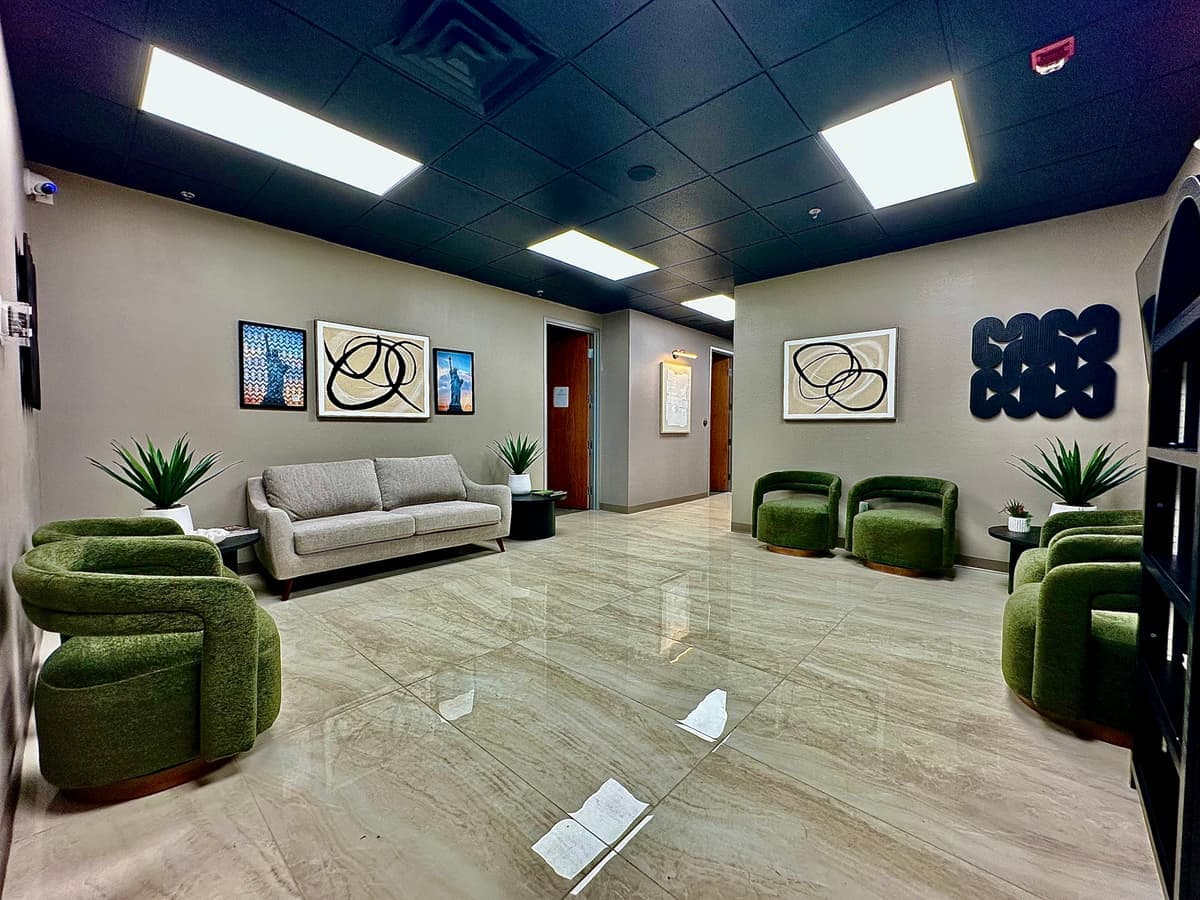
The physical environment of a treatment facility is not just about comfort. It is a clinical variable that affects treatment engagement, retention, and outcomes. Research on the built environment and mental health has consistently shown that natural light, access to outdoor spaces, private or semi private rooms, and aesthetically pleasing surroundings contribute to reduced stress, improved mood, and greater engagement in treatment.
For many clients, the decision to enter treatment is already fraught with fear and resistance. An environment that feels safe, comfortable, and dignified can make the difference between a client who engages fully in the process and one who leaves prematurely. Treatment retention is one of the strongest predictors of positive outcomes, and the treatment environment directly influences retention.
What Desert Recovery Centers Offers
At Desert Recovery Centers, we combine the clinical rigor of a top tier treatment program with the comfort and individualization of a luxury facility. Our clinical team includes doctoral level psychologists, licensed therapists, a board certified psychiatrist, and experienced medical staff. Our client to therapist ratios ensure that every client receives the individual attention their recovery requires.
Our programming includes individual therapy multiple times per week, evidence based group therapy, EMDR, psychiatric medication management, holistic wellness programming, and comprehensive aftercare planning. Our facilities offer private rooms, chef prepared meals, outdoor recreational areas, and a warm, professional environment designed to support healing.
The difference between luxury and standard rehab is not about luxury for its own sake. It is about the clinical depth, individualization, and quality of care that produce the best possible outcomes. When the stakes are this high, the quality of the clinical program matters more than anything else.
This article is for informational purposes only and does not constitute medical advice. The content has been reviewed by Dr. An Nguyen, Licensed Clinical Psychologist and Clinical Director at Desert Recovery Centers. If you or a loved one is struggling with addiction or a mental health condition, please contact a qualified healthcare professional. Desert Recovery Centers can be reached 24 hours a day at (623) 305-0496.