Glendale, Arizona

Luxury Rehab and Addiction Treatment in Glendale, Arizona

Our flagship 7,500 sq ft residential treatment center, where evidence-based clinical care meets resort-level comfort.

The Flagship Center Where It All Started

Our Glendale facility is where Desert Recovery Centers began, and it remains the heart of our mission. At 7,500 square feet, it's our largest residential center, providing 24/7 immersive care for adult men. Clients who step down to outpatient programming transition to our Phoenix center.

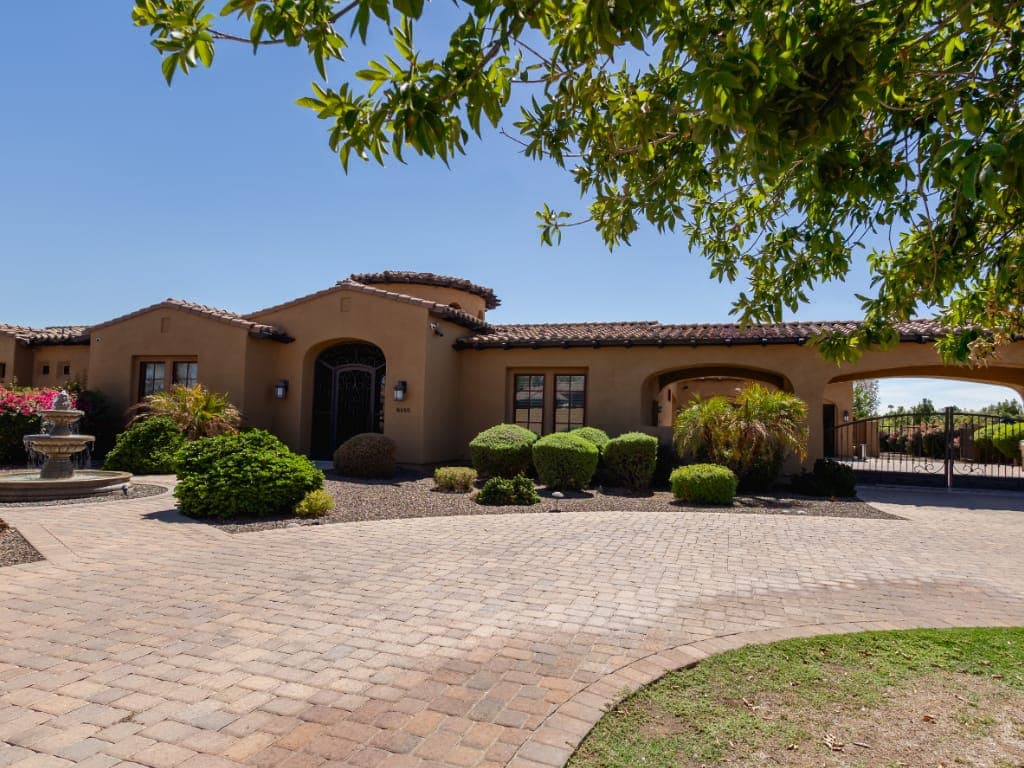
What you'll find here is a program built on clinical depth, not marketing promises. Licensed psychologists, a board-certified psychiatrist, and registered nurses deliver evidence-based treatment around the clock, in a luxury home-like setting with amenities that rival a resort. Basketball court, tennis court, pool, massage room, gourmet meals, because we believe that healing the whole person requires treating the whole person.

Our Glendale center serves the entire West Valley, Peoria, Surprise, Avondale, Goodyear, Buckeye, and beyond. If you or someone you love is ready for treatment that actually works, this is where it starts.

Glendale Recovery Center Tour

Facility Details

8105 W Frier Dr, Glendale, AZ 85303

Glendale, Arizona

Size: 7,500 sq ft

Amenities

Pool
Tennis Court
Basketball Court
Billiards
Massage Room
Gym
Group Therapy Rooms
Private Bedrooms
Outdoor Recreation
Schedule a Tour
Outdoor pool and recreation area at Desert Recovery Centers Glendale luxury rehab facility
Private bedroom at Desert Recovery Centers Glendale residential treatment center
Our Glendale Center

Contact & Location Details

Address

8105 W Frier Dr

Glendale, AZ 85303

(623) 305-0496

Admissions available 24/7

Programs

Residential Treatment

PHP, IOP, and OP available via step-down at our Phoenix outpatient center.

Amenities

Basketball Court
Tennis Court
Large Pool
State-of-the-Art Gym
Billiards Room
Massage Room
Gourmet Kitchen
Private Rooms
Group Therapy Room
Recreation Room
Therapy Offices
Outdoor Dining Area

Take a Virtual Tour

Click to watch a video tour of our Glendale facility

Client Stories

Recovery Stories from Our Glendale Clients

Dylan's Story: Recovery After Grief, Homelessness, and Addiction

Shared voluntarily and with consent. Individual experiences vary and are not a guarantee of any outcome.

From living in his car to helping others. This is Dylan's story. Connection is the opposite of addiction.
Read the full video transcript: Dylan's Story

So my name is Dylan Stamper. I'm from Kansas originally. I moved out here in 2015. My father passed in 2017 on Christmas Day. Unfortunately, my mom is struggling very hard with alcoholism, so I was kind of on my own, and I had to figure out, you know, how to be an adult, how to live life. Unfortunately, I got in with a bad crowd, and I slipped, you know, like, my mental health was declining. I started using substances to numb those feelings. At times, didn't even want to live, but I persevered. I decided that I was gonna do things my way. And my way gets me in places like these. I knew that my destiny at that point would have been jails, institutions, or debt. I went to treatment about eight times, and the eighth time, I just surrendered my will to my higher power. After living in my car for so long, being at a point to where I was in such a bad mental state that I thought, you know, people were watching me in my car. So I hid my keys under a rock and lived in a bush for a while, right? And then I happened to be sleeping in a hospital parking lot with my, in my car, thinking that was the safest place. I happened to have my first overdose there. Thank God I was outside of my car at the time. You know, I could have been in my car. Nobody would have found me. I wouldn't be here to date. And after that overdose, I finally believed that there was something, or someone out there looking over me. I didn't know who or what it was. I decided to go to crossroads. And that is where I graduated. I started running a big book study there. I tried to do everything I can. I was always asking, hey, can I rake the gravel? Can I wash the windows, just trying to keep myself busy, and I dove into the program, I decided to actually try medications. So I got med stabilized. I went through AA. Another program supervisor there offered me a job as I live in house manager at my 90 days clean. After that. Like, I found my passion, helping people became my new drug. It's amazing to be able to see somebody come in with nothing but the clothes on their back, no hopes, no dreams, no aspirations, not even a will to live. And they leave with this bright smile on their face, and out of all the places that I've been to, um, throughout my recovery journey and the places that I've worked, desert recovery centers, is the, their clinical team is spectacular. The people here care. The clients aren't just a number, like they are somebody that they want to follow through with. I've realized the connection is the opposite of addiction. Um, you know, that was something that I struggled with is I didn't really, I burned all my bridges. I didn't have anybody in my life. And to be able to grow in this community and be able to stay in the middle of the herd has just been amazing. And so if you are struggling with mental health with substance abuse, whatever it may be, you are not alone. There are so many people out here willing to help that are sharing the exact same feelings and experiences that you are and we are all here for you. I am here for you, desert recovery centers is here for you, and there is a way out.
A Veteran's Recovery: Chris Herrera's Story

Shared voluntarily and with consent. Individual experiences vary and are not a guarantee of any outcome.

A service injury. Ten years on pills. Profound loss. This is veteran Chris Herrera's story of rebuilding his life.
Read the full video transcript: Chris Herrera's Story

My name is Chris Herrera. I was born and raised in Alaska. I tore my ACL in the military, and they overprescribed me Percocet, so I did pills for over 10 years. So December 11, 2020. I lost my wife, Shasta suicide, in her grief. I chose to drink alcohol. as a cooking mechanism of isolating, withdrawing, about a month and a half before I got here. I was basically trying to drink myself, you know, and my cousin's ex-wife, found desert recovery, reached out to me, and I accepted, and showed up at Desert Recovery, Valentine's Day of 2026. I walked through the door. I was a complete mess. The house was embracing, it was warming. There was a lot of camaraderie there. I didn't like to share, but once sitting in the groups, I noticed that I had a lot of similar stories from the other guys, and I started basically piggybacking off what they were saying, and I didn't feel alone anymore. Very accepting. No fingers were pointed. I've taken everything that they've taught me as far as the information on how to apply positive outlook in life, and how to handle life in a positive manner, and how to handle relationships in a positive manner, finding God again, and embracing that. And as I call it now, I'm walking. Chest. This place has saved my life, and I'm looking forward to living my life now in a positive way.

Jeff's Story: Finding Mental Health First Treatment

Shared voluntarily and with consent. Individual experiences vary and are not a guarantee of any outcome.

Other programs treated the substance and missed the mental health. This is Jeff's story.
Read the full video transcript: Jeff's Story

There was a huge blow up fight at the house to the point to where I had scared pretty much all the girls at home, so I think I'd spent that 1st night in like Cracker Barrel parking lot. I'd been struggling mentally for a while. It took me a long time to understand that I had problems and it wasn't everyone else. I've had a lot of anger issues, and unfortunately, they came out at home. So the other programs said that they had mental health, but they were very, very strong on alcohol and substance in the 12 steps, you know? It's night and day difference coming here because just their curriculum or literature that they have put together. It's for mental health. It's for what you're struggling with if you're not in the substance addiction. This time it's a totally different feeling because I wasn't on that hive coming in, because I came in, I guess, like on a low, you know, from that huge fight at the house, I forced myself to be more honest in the therapy sessions, which helped. You know what I mean? Because it's getting to the root of all of the issues and the problems. Don't think that you're gonna get to whatever your bottom is before you come in, because you don't ever know what that's gonna be, and it truly is a no judgment, zone, for you to get that stuff out and in the open, because that's the only way you start healing, like trying to hold all that stuff inside doesn't, doesn't work.

What We Treat

Addiction and Mental Health Treatment at DRC Glendale

Our flagship Glendale team treats the full spectrum of addiction and mental health conditions with a dual diagnosis specialization, ensuring all co-occurring conditions are addressed simultaneously. For clients who need it, care begins with coordinated medical detox through our trusted partner facilities before residential treatment at our Glendale center.

Coverage varies by plan. Contact us to verify your benefits.

Our Approach

Clinical Excellence in Every Detail

Doctoral-Level Clinical Team

Your treatment is directed by licensed clinical psychologists with doctoral degrees, not counselors or paraprofessionals. A board-certified psychiatrist provides medication management, and registered nurses offer 24/7 medical monitoring.

Individualized Treatment Plans

Every client receives a treatment plan designed specifically around their diagnosis, trauma history, personal goals, and strengths. Plans are reviewed and adjusted weekly based on measurable progress.

Evidence-Based Therapies

CBT, DBT, EMDR, motivational interviewing, trauma-focused therapy, and behavioral activation, delivered by clinicians specifically trained in each modality.

Holistic Wellness

Yoga, mindfulness meditation, art therapy, nutritional counseling, and fitness programming complement clinical therapies, because lasting recovery requires healing the whole person.

Family Therapy Program

Our family program includes psychoeducation, communication skills training, joint therapy sessions, and family support groups, rebuilding relationships damaged by addiction and mental health conditions.

Is there a Desert Recovery Centers in Glendale?

Yes, Desert Recovery Centers' flagship facility is located at 8105 W Frier Dr, Glendale, AZ 85303. Desert Recovery Centers is a Joint Commission accredited luxury treatment provider in Arizona. The Glendale location is a 7,500-square-foot male-only residential treatment center. PHP and IOP programs are offered at our outpatient center in Phoenix at 4160 N. 108th Ave.

What addiction treatment is available in Glendale, Arizona?

Desert Recovery Centers offers addiction and mental health treatment at our flagship Glendale facility. As a Joint Commission accredited luxury treatment center in Arizona, we provide evidence-based dual diagnosis treatment using CBT, DBT, EMDR, and holistic therapies, delivered by licensed psychologists and a board-certified psychiatrist with resort-level amenities including a basketball court, tennis court, and pool.

Does Desert Recovery Centers accept insurance for Glendale residents?

For commercial insurance, Desert Recovery Centers works on an out-of-network basis with major plans including Aetna, Blue Cross Blue Shield, Cigna, and UnitedHealthcare. Many out-of-network plans provide significant coverage for our level of care. We are also in-network with TRICARE through TriWest, and offer cash-pay options. Our admissions team verifies your benefits at no cost. Call (623) 305-0496 for a free insurance check.

FAQ

Frequently Asked Questions

Where is the Desert Recovery Centers Glendale location?

Our Glendale facility is located at 8105 W Frier Dr, Glendale, AZ 85303 and serves clients throughout the greater Phoenix metropolitan area. Contact us at (623) 305-0496.

What addictions are treated at the Glendale location?

The Glendale facility treats alcohol addiction, opioid and heroin addiction, fentanyl addiction, meth addiction, cocaine addiction, prescription drug addiction, and other substance use disorders through residential inpatient care with dual-diagnosis clinical programming.

Is Glendale a men-only facility?

Yes. Glendale is an adult-men-only residential facility, no exceptions.

What insurance does the Glendale location accept?

The Glendale location accepts out-of-network coverage from most major commercial insurance plans (Aetna, Blue Cross Blue Shield, Cigna, and UnitedHealthcare), is in-network with TRICARE through TriWest, and offers cash-pay options. Call (623) 305-0496 for a free insurance verification.

Is the Glendale facility Joint Commission accredited?

Yes. The Desert Recovery Centers Glendale location holds Joint Commission Gold Seal of Approval accreditation, the highest standard in behavioral health care quality and patient safety.

What amenities are at the Glendale location?

The Glendale facility features luxury amenities including a pool, tennis court, basketball court, comfortable private and semi-private rooms, gourmet dining, group therapy rooms, and outdoor recreation areas in a residential treatment setting.

Your Recovery Starts With One Call

Our admissions team is available 24 hours a day, 7 days a week. Whether you're ready to start treatment or just have questions, we're here for you.

Most clients begin treatment within 48 hours of their first call.