Two Fundamentally Different Approaches to Depression
For most people diagnosed with depression, antidepressant medication is the first line of treatment. And for many, medication works well enough. But for a significant number of people, antidepressants are either ineffective, produce intolerable side effects, or both. For these individuals, TMS therapy represents a fundamentally different approach, one that targets the brain directly rather than through the bloodstream, and one that offers real hope for people who have struggled with treatment resistant depression.
Understanding how these two approaches differ, what the evidence shows about their effectiveness, and who is the best candidate for each is essential for making an informed treatment decision.
How Antidepressants Work
Antidepressant medications work by altering the brain's neurochemistry, typically by increasing the availability of neurotransmitters like serotonin, norepinephrine, or dopamine. The most commonly prescribed class, SSRIs (selective serotonin reuptake inhibitors), works by blocking the reabsorption of serotonin in the brain, making more of the neurotransmitter available in the synaptic space. Other classes, including SNRIs, tricyclics, MAOIs, and atypical antidepressants, work through different but related mechanisms.
Antidepressants are systemic medications, meaning they travel through the bloodstream and affect the entire body, not just the brain. This is why they produce side effects that extend far beyond their intended target. Common side effects include weight gain, sexual dysfunction, drowsiness or insomnia, nausea, dry mouth, and emotional blunting. These side effects are the primary reason that many people discontinue antidepressant medication, even when the medication is helping their depression.
Antidepressant Response Rates: The STAR*D Reality
The largest and most influential study of antidepressant effectiveness is the STAR*D trial (Sequenced Treatment Alternatives to Relieve Depression), funded by the National Institute of Mental Health. The results were sobering. Only about 27.5 percent of patients achieved full remission of their depression with their first antidepressant trial. After a second medication trial, the cumulative remission rate improved to approximately 50 percent. By the third and fourth medication trials, response rates dropped further, and the rates of relapse for those who had responded increased.
What this means in practice is that approximately half of all people prescribed antidepressants do not achieve adequate relief from their first two medication attempts. For these individuals, the journey of finding the "right" medication can take months or years, involving multiple medication switches, dosage adjustments, and ongoing side effects, all while continuing to suffer from depression.
How TMS Therapy Differs
TMS (Transcranial Magnetic Stimulation) takes an entirely different approach. Rather than introducing a chemical into the bloodstream, TMS delivers focused magnetic pulses directly to the left dorsolateral prefrontal cortex, a brain region that is underactive in people with depression. These pulses stimulate neural activity in the targeted area, gradually restoring healthier patterns of brain function.
Because TMS is targeted rather than systemic, it does not produce the side effects associated with antidepressant medication. There is no weight gain, no sexual dysfunction, no drowsiness, and no emotional blunting. The most common side effect is mild scalp discomfort during the first few sessions, which typically resolves as the client adjusts to the sensation.
TMS is also non invasive and does not require anesthesia or sedation. Sessions are conducted in a comfortable chair, clients remain fully alert throughout, and they can return to their normal activities immediately after each session. There is no "drug hangover," no adjustment period, and no taper required when treatment ends.
NeuroStar Outcomes: 83% Improvement, 62% Remission
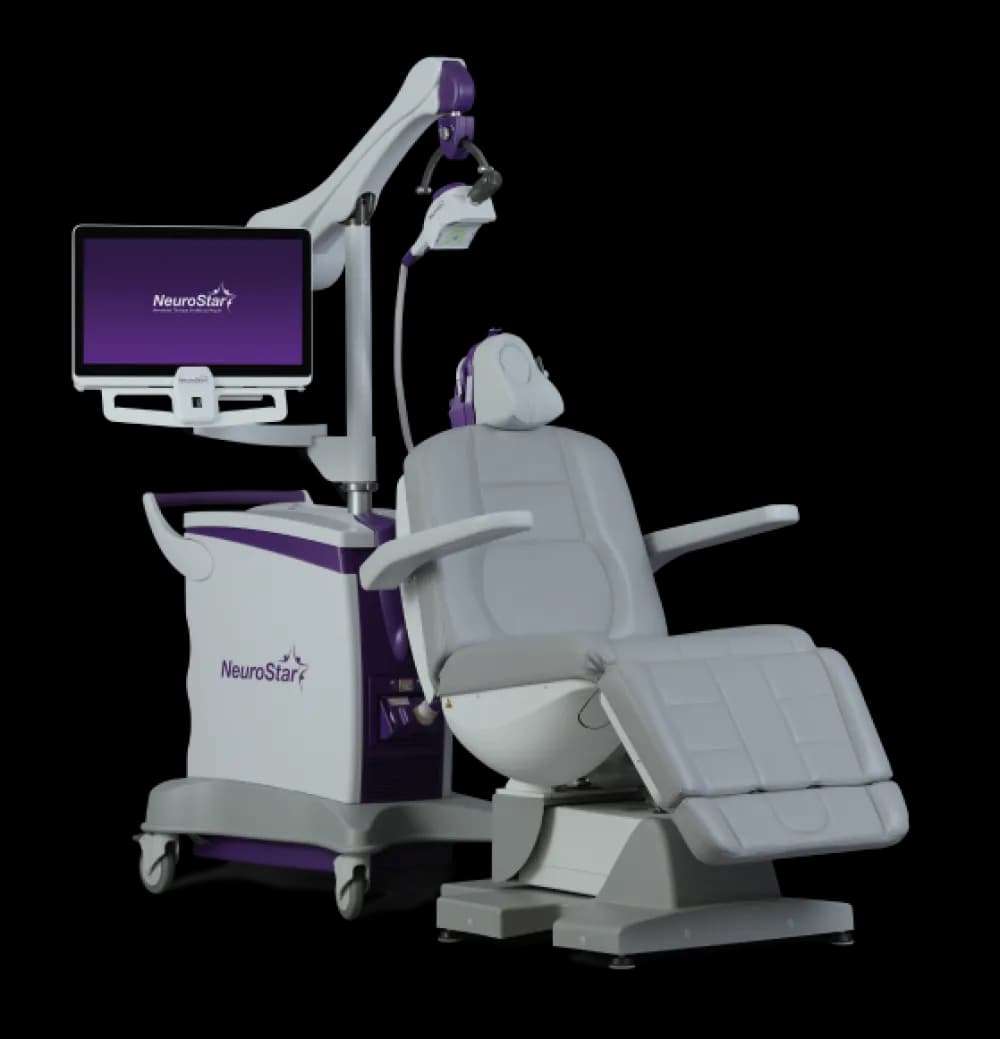
The NeuroStar TMS system, which is used at Desert Recovery Centers, has the largest clinical evidence base of any TMS system. Real world outcomes data from the NeuroStar outcomes registry, which tracks results from clinical practice rather than controlled trials, shows that approximately 83 percent of patients who complete a full course of treatment experience clinically meaningful improvement in their depression, and approximately 62 percent achieve complete remission.
These numbers are particularly striking when you consider that TMS is typically used in patients who have already failed one or more antidepressant trials, a population that is generally harder to treat. The fact that TMS achieves these response rates in a treatment resistant population speaks to the effectiveness of the approach.
Who Is the Ideal Candidate for TMS?
The ideal candidate for TMS is an adult with major depressive disorder who has not achieved adequate relief from at least one antidepressant medication. This includes people who have experienced partial response (some improvement but not enough), people who have experienced intolerable side effects that led to discontinuation, and people who prefer a non pharmacological approach to treatment.
TMS may not be appropriate for everyone. People with metallic implants in or near the head, a history of seizures, or certain neurological conditions may not be candidates. A thorough clinical evaluation is conducted before treatment begins to ensure that TMS is safe and appropriate for each individual.
Combining TMS With Other Treatments
TMS does not have to be an either or choice with medication. Many clients continue their antidepressant medication while receiving TMS, and the combination can be more effective than either treatment alone. TMS can also be combined with psychotherapy to optimize outcomes. TMS is provided by Desert TMS LLC, an affiliated licensed provider on-site at Desert Recovery Centers.
Cost and Payment Options
Desert TMS LLC offers private pay and may bill certain commercial insurance plans as an out-of-network provider. Coverage varies by plan, and prior authorization may be required. Verification of benefits or authorization does not guarantee payment. You may be responsible for applicable deductible, coinsurance, and other patient responsibility under your plan. We do not accept Medicare or Medicaid. Call (602) 600-0325 and we can verify your benefits before treatment.
For people who have been struggling with depression and have not found relief from medication, TMS offers a clinically proven, drug free alternative that can produce meaningful, lasting improvement. If you are interested in learning whether TMS is right for you, contact Desert Recovery Centers for a consultation.
This article is for informational purposes only and does not constitute medical advice. If you or a loved one is struggling with addiction or a mental health condition, please contact a qualified healthcare professional. Desert Recovery Centers can be reached 24 hours a day at (623) 305-0496.