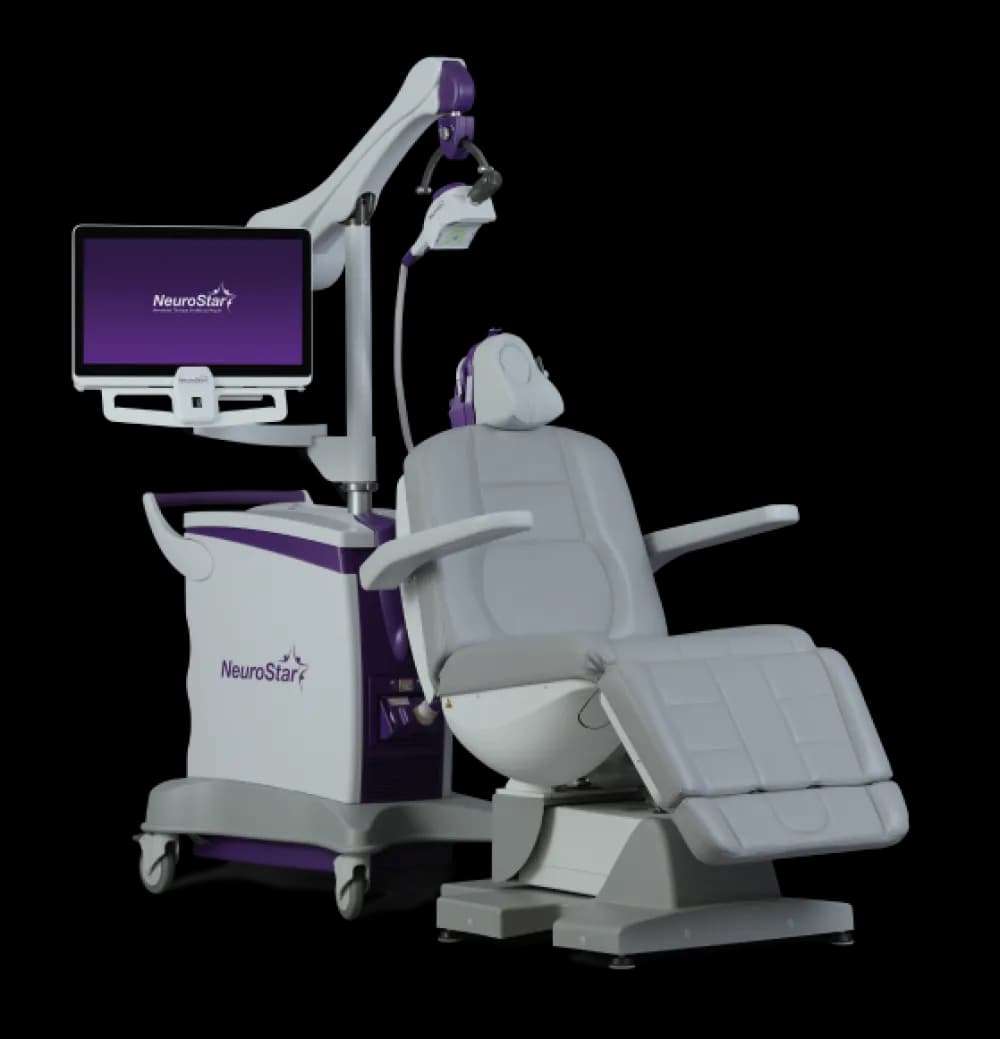
What Is TMS Therapy?
Transcranial Magnetic Stimulation, or TMS, is an FDA cleared, non invasive treatment for major depressive disorder (FDA — rTMS Systems Class II Special Controls Guidance). Unlike antidepressant medications, which work systemically through the bloodstream and affect the entire brain and body, TMS delivers focused magnetic pulses to the left dorsolateral prefrontal cortex, a specific brain region that is underactive in people with depression (NIMH — Brain Stimulation Therapies). These pulses stimulate neural activity in the targeted area, gradually restoring healthier patterns of brain function over the course of treatment.
TMS is not electroconvulsive therapy (ECT). It does not require anesthesia, sedation, or recovery time. Sessions are conducted in a comfortable chair, clients remain fully awake and alert throughout, and they can drive themselves to and from appointments. For people who have not responded to antidepressant medications or who have experienced intolerable side effects from medication, TMS therapy offers a fundamentally different approach to treating depression.
The Initial Consultation
Before beginning TMS treatment, every client undergoes a thorough clinical evaluation. This consultation includes a detailed review of the client's psychiatric history, previous medication trials, current symptoms, and overall health. The purpose is to determine whether TMS is clinically appropriate and to establish baseline measurements of depression severity using validated assessment tools.
Not everyone is a candidate for TMS. The treatment is most commonly indicated for adults with major depressive disorder who have not achieved adequate relief from at least one antidepressant medication (NIMH — Brain Stimulation Therapies). It is also used for people who have experienced significant side effects from medication and are seeking a non pharmacological alternative. People with certain metallic implants in or near the head, a history of seizures, or certain neurological conditions may not be candidates for TMS.
What the First Session Feels Like
The first TMS session is longer than subsequent sessions because it includes a process called motor threshold mapping. During this process, the TMS technician uses the device to deliver test pulses to determine the exact amount of magnetic energy needed to stimulate your brain. This is done by targeting the motor cortex and observing thumb movement in response to the pulses. Once the motor threshold is established, the coil is repositioned over the left dorsolateral prefrontal cortex, and the treatment parameters are set.
During treatment, you will feel a tapping or clicking sensation on the scalp at the site of stimulation. Some people describe it as a woodpecker like feeling. It can be mildly uncomfortable initially, but most clients adapt within the first few sessions. There is no pain involved, and no anesthesia or sedation is needed. You remain seated in a comfortable reclined chair, and you can listen to music, watch television, or simply relax during the session.
Treatment Frequency and Duration
A standard course of TMS therapy consists of 36 sessions delivered over approximately 6 to 9 weeks. Sessions are typically scheduled 5 days per week (Monday through Friday) for the first 6 weeks, followed by a tapering schedule of 3 sessions per week, then 2 sessions per week during the final weeks. Each session lasts approximately 19 to 37 minutes, depending on the specific protocol used.
The NeuroStar system used at Desert Recovery Centers offers a TMS protocol backed by a large body of published clinical research, with over 6.6 million treatments delivered worldwide, according to NeuroStar. The treatment schedule is designed to produce cumulative neurological changes, which means that improvement is typically gradual rather than immediate.
What to Expect Week by Week
Weeks 1 and 2
During the first two weeks, most clients do not notice significant changes in mood. This is normal and expected. The brain is beginning to respond to the stimulation, but the neurological changes have not yet reached the threshold for noticeable symptom improvement. Some clients report subtle changes in sleep quality, energy levels, or appetite during this period.
Weeks 3 and 4
Many clients begin to notice initial improvements during weeks three and four. Common early changes include improved sleep, increased energy, greater ability to concentrate, and a gradual lifting of the heaviness or flatness associated with depression. For some clients, family members or friends notice changes before the client does.
Weeks 5 and 6
Weeks five and six are typically when the most significant improvements occur. Clients often report feeling "like themselves again," with meaningful reductions in sadness, hopelessness, fatigue, and cognitive fog. Motivation and engagement in daily activities increase, and the emotional numbness that characterizes depression begins to lift.
Tapering Phase
During the tapering phase, sessions decrease in frequency while the brain consolidates the neurological changes that have occurred. This gradual step down helps ensure that the improvements are durable and reduces the likelihood of symptom return.
Outcome Expectations and Who Responds Best
Clinical evidence supports TMS as an effective treatment option for treatment-resistant depression, with some patients experiencing clinically meaningful improvement or remission (NIMH — Brain Stimulation Therapies). TMS is typically used in patients who have not responded to one or more medication trials.
The best responders to TMS tend to be individuals with moderate to severe depression who have not responded to one or two medication trials but who do not have treatment resistance across many medication classes. However, significant improvement is seen across a wide range of clinical presentations, and many people who have struggled with depression for years experience their first meaningful relief through TMS.
TMS is not a cure for depression. Some clients maintain their improvement indefinitely, while others may benefit from periodic maintenance sessions. TMS can also be combined with psychotherapy and, in some cases, medication to optimize outcomes. TMS is provided by Desert TMS LLC, an affiliated licensed provider on-site at Desert Recovery Centers.
This article is for informational purposes only and does not constitute medical advice. If you or a loved one is struggling with addiction or a mental health condition, please contact a qualified healthcare professional. Desert Recovery Centers can be reached 24 hours a day at (623) 305-0496.